
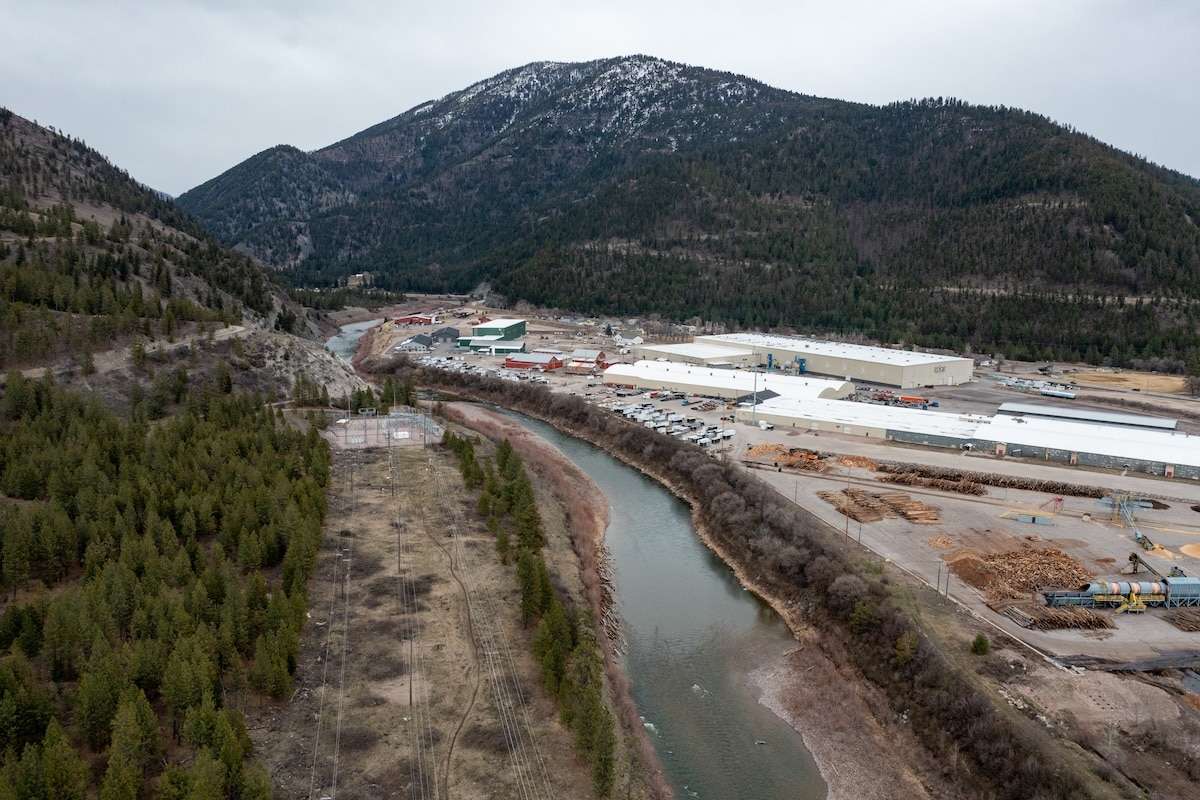
The Bonner mill site, near Missoula, Montana, was the recent target for data center development. In July 2026, following widespread public outcry and the property owner’s decision not to sign the project’s application, tech company Krambu had to stop the project. Photo credit: John Stember
In New Mexico, Montana, and beyond, the historic and ongoing harms caused by nuclear technologies persist. At the JTA, we join with Indigenous Peoples and frontline communities and workers who have long challenged and been poisoned by uranium mining, toxic waste disposal, and nuclear weapon’s testing. Compounded with this injustice is growing concern with how data center projects are being used as a reason for nuclear power technology and buildout. In the face of these threats, many Indigenous Peoples, communities, and diverse coalitions are raising the alarm by calling out nuclear technologies and successfully blocking data center development.
In August 2026, the Project on Youth and Non-Military Opportunities (YANO) provided a film preview of the documentary First We Bombed New Mexico, followed by a speech about activist efforts. The event, part of “CINE EN EL BARRIO,” occurred at the Chicano Park and Cultural Center in Barrio Logan, San Diego, California. Project YANO described the gathering as a space “to learn about the grassroots movement demanding justice for the New Mexican and Native residents of southern New Mexico who suffered multigenerational cancers tied to militarization & the exposure of their land to radioactive fallout from the Trinity nuclear test.”
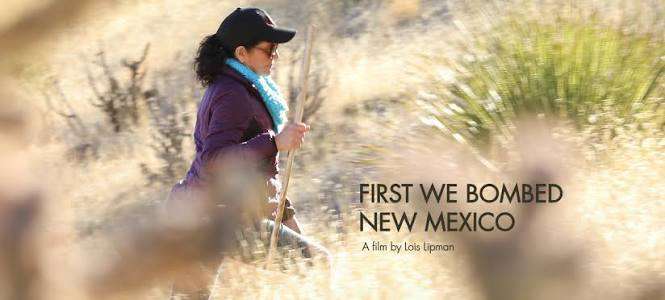
JTA joined Project YANO as an event cosponsor. Photo credit: Project YANO
While this ongoing poisoning persists, and as the most impacted communities and allied groups also persist in calling out this injustice and seek reparations, concerns are mounting about growing advocacy for nuclear energy to power data centers. At JTA, we remain opposed to nuclear technologies and their full impact (death) cycle—including in the extraction of uranium to power imperialism and militarization and in proposals to buildout this technology to fuel data centers that will deplete local water supplies and pressure everyday ratepayers to pay for energy we do not consume or want.
So-called Montana is one of many places being heavily targeted for data center development. According to the Montana Environmental Information Center,
As Montana becomes a target for energy-hungry data centers, a troubling national trend is emerging. The massive electricity demand from artificial intelligence is driving renewed interest in nuclear power — not because it can be deployed quickly, but because policymakers are increasingly willing to weaken long-standing safety protections to speed its development and spend billions of taxpayer dollars to subsidize the industry. And as the nuclear industry is deregulated, communities will continue to be faced with the permanent storage of radioactive waste onsite regardless of community concerns. This is a dangerous mismatch. Traditional nuclear reactors typically take 10 to 20 years to license and build, while AI companies want enormous amounts of electricity now. Instead of recognizing that reality, the federal government is pursuing policies designed to fast-track nuclear development and diminishing the independence of the Nuclear Regulatory Commission (NRC). For years, nuclear safety has relied on the ALARA principle, which requires radiation exposure to be kept “as low as reasonably achievable.” There is now talk of weakening these standards, which would increase public exposure to ionizing radiation while reducing safeguards designed to prevent serious accidents. The NRC is considering rolling back decades of radiation safety protections at the same time the nuclear industry is pushing for rapid expansion, largely to serve data centers. These dangerous changes would ignore a simple scientific reality: there is no safe level of radiation exposure.”
“Stop Data Colonialism”: Many Indigenous Peoples and Frontline Communities Are Refusing Data Centers and Achieving Key Wins
From the Seminole Nation’s decision to place a moratorium on data centers, to the “Stop Data Colonialism” campaign of Honor the Earth, Indigenous Peoples, yet again, are showing the way for more livable relations and what must be rejected to continue moving toward Indigenous sovereignty and co-liberation. Based in Lame Deer, Montana, Honor the Earth leads a campaign that provides online resources that include a Data Center Tracker, a Fact Sheet and Flier, Newsletters, and a “No Data Centers on Native Land Toolkit.”
Also in Montana, in July 2026, after a diverse coalition united to oppose a data center proposed in Bonner, the project was withdrawn and Missoula County commissioners approved a one-year data center development moratorium. The working-class town of Bonner is part of the United States’ largest superfund complex. This case demonstrates how the same communities that have been exploited historically continue to be targeted today. It also shows that when frontline and aligned communities rise up, wins are possible. This and other stories of successfully defeating data center proposals can provide key teachings for continuing to resist this buildout and the nuclear technologies that false solutionists claim are “needed.”
By tracking historic and contemporary nuclear threats and harms, including the full impact cycle, Indigenous Peoples and frontline communities can be better equipped to co-create and carry out successful campaigns that advance root, systemic changes that refuse continued radiation poisoning and other nuclear-caused damage. In the words of Honor the Earth, “Ask Your Auntie, not AI.”

Honor the Earth frequently features the work of Indigenous artists to communicate the organization’s projects and priorities. Photo credit: Honor the Earth
Suggested Readings:
-Myrriah Gómez, Nuclear Nuevo México: Colonialism and the Effects of the Nuclear Industrial Complex on Nuevomexicanos
-University of Arizona Press, “Five Questions with Myrriah Gómez”
-Montana Environmental Information Center, “Data Centers”
-Endres, Nuclear Decolonization: Indigenous Resistance to High-Level Nuclear Waste Siting